
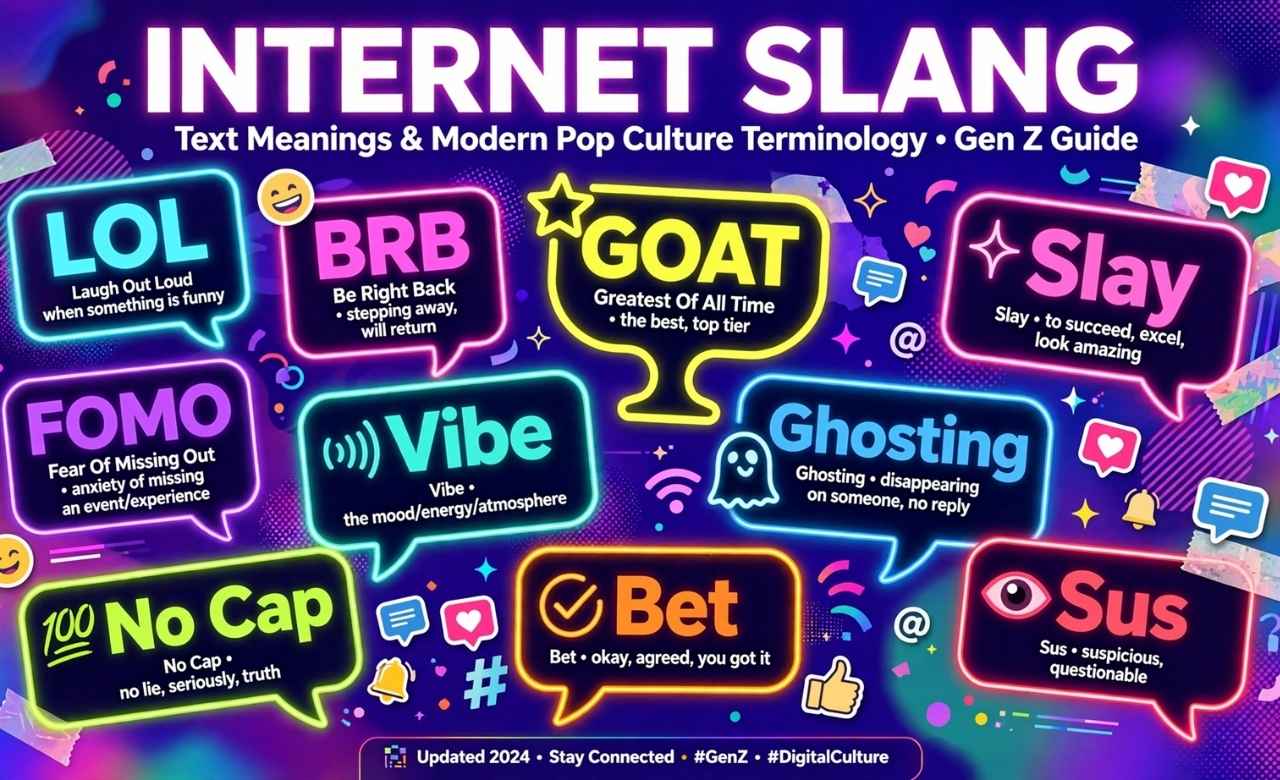
The rapid evolution of digital communication, mobile messaging apps, and social platforms like TikTok, Instagram, and X has fundamentally transformed modern language. Today’s lexicon moves faster than traditional dictionaries can keep up. Acronyms, truncated phrasing, subtle emoji nuances, and underground slang allow communities to convey complex emotions, social boundaries, and cultural inside jokes in just a few keystrokes.
Whether you are deciphering an unfamiliar acronym in your direct messages, navigating online content warnings, or exploring edgy username humor and body art symbolism, this comprehensive guide decodes modern text slang, digital terminology, and viral subculture phrases.
What Is Internet Slang and Why Is It So Popular?
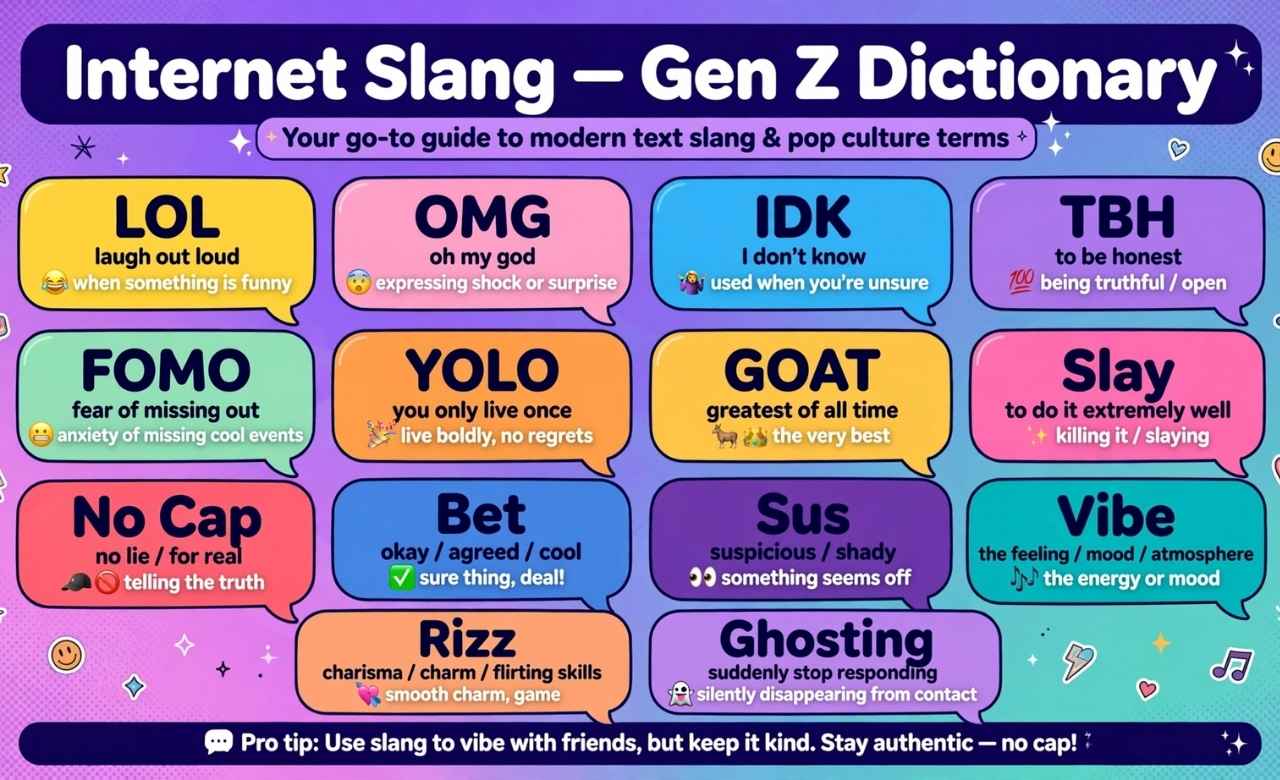
Internet slang refers to informal words, abbreviations, acronyms, and expressions people use while communicating online. You’ll commonly see it in text messages, social media posts, gaming chats, comments, forums, and online communities.
Terms such as LOL, OMG, BTW, SMH, IDK, TBH, FR, IMO, and LMK can make digital conversations faster and more casual. Instead of writing a complete sentence, users can communicate an emotion or idea with just a few letters.
Internet slang also changes quickly. A phrase that becomes popular on TikTok, Instagram, Reddit, Discord, or X can spread to millions of users within a short time. Some expressions remain popular for years, while others disappear as online trends change.
The meaning of slang can also depend on context, tone, platform, and audience. For example, “FR” usually means “for real,” but the exact tone can range from agreement to emphasis.
Digital Communication & Texting Abbreviations
Navigating group chats and social media comments requires an understanding of shorthand abbreviations designed for fast-paced mobile interaction.
- Emotional Validation and Agreement: When someone drops an enthusiastic acronym to validate an undeniable truth or back up a friend’s confidence, you are likely seeing IKTR. Learn how and when to deploy it in our breakdown of IKTR meaning in text.
- Flirty Check-Ins and Photo Prompts: Casual conversations on Snapchat and direct messaging often rely on playful prompts to ask for visual updates or gauge physical appearance. Understand the social etiquette and context behind WYLL meaning in text.
- Online Safety and Sensitive Content Disclaimers: Digital spaces frequently utilize standardized shorthand warnings to protect readers from distressing topics. Learn the correct usage and etiquette behind TW meaning in text.
Emoji Nuances & Digital Symbology
In text-based conversations where tone of voice is absent, emojis serve as crucial emotional markers. However, their meanings often carry subtle undertones that shift depending on social context.
- Purity, Support, and Platonic Affection: Unlike the fiery passion of a red heart, lighter shades carry distinct emotional weight. Discover the layered emotional undertones behind the white heart meaning across different digital relationships.
Subculture Slang & Niche Dating Terms
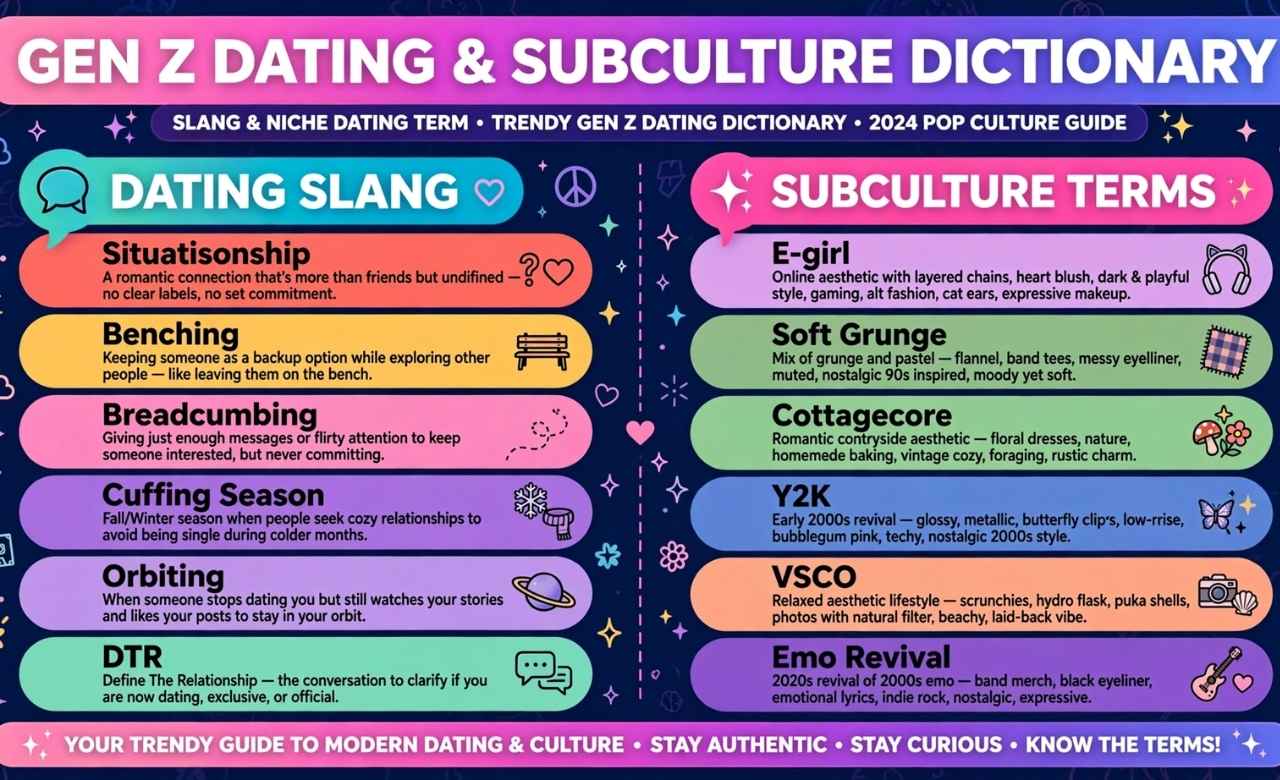
Internet subcultures and modern dating apps frequently create their own private vocabularies, blending cheeky euphemisms with specific community identifiers.
- Location-Based Apps and Terminology: Modern hookup and casual dating platforms feature unique community-driven phraseology. Discover the origin, background, and safety implications surrounding Sniffies meaning.
- Playful Euphemisms and Intimacy Trends: Curious about unconventional slang terms emerging from viral relationship discussions? Explore our culturally informative breakdown of snowball kiss meaning.
Humor, Creative Handles & Dark Symbolism
Beyond everyday messaging, digital culture thrives on pun-driven username branding, edgy internet tropes, and counterculture personal expressions.
- Cheeky Wordplay and Puns: Double entendres and humorous alias tropes remain a staple of internet humor and gaming lobbies. If you enjoy classic comedic naming conventions, browse our hilarious list of funny names like Ben Dover.
- Niche Creator Handles: For digital content creators establishing distinct online personas on adult-adjacent subscription platforms, picking a catchy, marketable alias is essential; find creative ideas in our guide to feet finder names.
- Literary Allusions in Body Art: Internet culture often intersects with classic poetry and gothic themes. Understand how dark romanticism and suppressed resentment translate into visual ink with our deep dive into the poison tree tattoo meaning.
How to Stay Current with Digital Slang
To navigate internet linguistics without miscommunicating, keep these simple guidelines in mind:
- Read the Platform Context: A phrase popular on TikTok may feel completely out of place in a professional Slack or Discord channel. Pay attention to the platform’s social baseline.
- Consider the Tone and Subtext: Many modern slang terms carry playful sarcasm, boundary-setting warnings, or hyper-niche cultural references that can be misinterpreted if taken too literally.
- Avoid Overuse: Authentic digital fluency comes from understanding when an acronym fits naturally into the conversation rather than forcing every trending phrase into a single message.
Click through the individual guides highlighted above to explore the historical origins, real-life chat examples, and cultural contexts behind today’s most popular text slang and online terms.
Common Texting Abbreviations and Their Meanings
Texting abbreviations help people communicate quickly, especially when conversations happen through smartphones and messaging apps. Many abbreviations have become so common that people use them in everyday digital conversations without thinking about their original meaning.
Some popular examples include:
- LOL — Laughing out loud
- BRB — Be right back
- BTW — By the way
- IDK — I don’t know
- IMO — In my opinion
- TBH — To be honest
- OMG — Oh my God
- LMK — Let me know
- NGL — Not gonna lie
- SMH — Shaking my head
- FYI — For your information
- IRL — In real life
- DM — Direct message
- AFK — Away from keyboard
These terms are particularly common in texting, social media comments, gaming communities, and group chats. Understanding them can make online conversations much easier to follow.
Gen Z Slang and Modern Social Media Language
Gen Z slang has significantly influenced modern internet communication. Many expressions used by younger social media users originate from memes, music, gaming, TikTok trends, online communities, and African American Vernacular English (AAVE).
Popular terms can include rizz, no cap, cap, slay, lowkey, highkey, sus, bet, period, ate, vibe, mid, and it’s giving.
For example, “no cap” generally means someone is being honest, while “cap” can refer to a lie or exaggeration. “Rizz” is commonly used to describe charm or the ability to attract someone.
However, slang doesn’t have one permanent definition. Meanings can evolve as communities adopt and remix expressions. That’s why understanding the surrounding conversation is often more important than simply memorizing a dictionary definition.
Internet Acronyms Used in Social Media and Online Chats
Internet acronyms are shortened forms of phrases that make digital communication faster. They’re especially common when users want to express reactions, opinions, emotions, or instructions without typing long sentences.
For example, FOMO means “fear of missing out,” while YOLO means “you only live once.” POV, meaning “point of view,” became especially common in short-form video captions and memes.
Other examples include:
- GOAT — Greatest of all time
- FOMO — Fear of missing out
- YOLO — You only live once
- POV — Point of view
- OOTD — Outfit of the day
- TMI — Too much information
- NSFW — Not safe for work
- ICYMI — In case you missed it
- TL;DR — Too long; didn’t read
These abbreviations can appear in captions, comments, hashtags, text messages, Reddit discussions, and online articles.
Meme Language, Viral Phrases, and Pop Culture Terms
Memes play an important role in creating and spreading modern internet terminology. A phrase from a movie, celebrity interview, song, television show, gaming community, or viral video can quickly become part of everyday online language.
Meme terminology often relies on shared cultural knowledge. A person familiar with the original meme may immediately understand the joke, while someone unfamiliar with it may find the phrase confusing.
Pop culture expressions can also change meaning after being adopted by internet communities. A phrase may start as a reference to a specific event but later become a general reaction or humorous expression.
This is why modern pop culture terminology is constantly evolving. Memes, viral videos, fandoms, music, celebrities, and streaming platforms all contribute to the development of new online language.
Gaming Slang and Online Community Terminology
Gaming communities have created a large vocabulary of their own. These terms are frequently used in multiplayer games, Discord servers, Twitch streams, Reddit communities, and gaming chats.
Common gaming slang includes:
- GG — Good game
- GLHF — Good luck, have fun
- AFK — Away from keyboard
- NPC — Non-player character
- OP — Overpowered
- Noob — An inexperienced player
- Nerf — Reduce the power of something
- Buff — Increase the power of something
- Clutch — A successful action under pressure
- Lag — Delayed communication between the player and game server
Some gaming terms have moved beyond video games and entered mainstream internet culture. Words such as NPC, clutch, OP, and AFK can now appear in ordinary social media conversations.
Slang Used to Express Emotions and Reactions
A major purpose of internet slang is to communicate emotions quickly. Instead of explaining a complicated reaction, users can use a short expression that conveys the feeling immediately.
For example, “LOL” can indicate amusement, while “SMH” can express disappointment, disbelief, or frustration. “OMG” often communicates surprise, and “WTF” can express shock or confusion.
Other expressions include:
- LMAO — Strong laughter
- ROFL — Extreme laughter
- SMH — Disbelief or disappointment
- FR — For real
- ISTG — I swear to God
- NGL — Not gonna lie
- WTF — Strong surprise, confusion, or disbelief
The same slang term can have different emotional intensity depending on the conversation. Punctuation, capitalization, emojis, and surrounding words can also change how a message feels.
How Social Media Platforms Create New Slang
Social media platforms have become major sources of modern vocabulary. TikTok, Instagram, Reddit, X, YouTube, Twitch, and Discord each have communities that develop their own expressions and communication styles.
Short-form video platforms can make a new phrase go viral within days. Hashtags and recommendation algorithms can expose users to expressions from communities they wouldn’t normally encounter.
Online slang can then move from social media into everyday conversations. People may start using a viral phrase with friends, in text messages, or even in professional marketing.
However, not every trending expression has the same lifespan. Some become permanent parts of internet vocabulary, while others disappear when the original trend loses popularity.
How Internet Slang Changes Language and Communication
Internet slang isn’t simply a collection of random abbreviations. It demonstrates how language adapts to new technologies and communication environments.
Traditional written communication often requires complete sentences and formal grammar. Online conversations, however, can be faster, shorter, more visual, and more conversational.
Users combine abbreviations, emojis, memes, GIFs, hashtags, slang, and intentional misspellings to communicate tone and emotion. This creates a form of digital communication that is different from traditional writing.
At the same time, internet slang doesn’t necessarily replace standard language. Most people switch between formal and informal communication depending on the situation. Someone may use slang with friends while writing completely differently in a job application or academic paper.
Why Understanding Internet Slang and Pop Culture Terminology Matters
Understanding modern internet slang can help you interpret conversations across social media, messaging platforms, gaming communities, and online forums. It can also help you understand memes, viral trends, captions, and comments without constantly searching for explanations.
For content creators, marketers, bloggers, and businesses, knowing current terminology can provide useful insight into how different online audiences communicate. However, slang should be used naturally rather than forced into every piece of content.
The most important thing is context. Internet language changes rapidly, and a word can have different meanings across communities. Before using unfamiliar slang, check how the term is actually being used and whether it fits your audience.
Ultimately, internet slang reflects the creativity and speed of modern digital communication. New expressions will continue to appear as social platforms, technology, entertainment, and online communities evolve.
Frequently Asked Questions
1. What is internet slang?
Internet slang is informal language used in texts, social media, gaming chats, forums, and online communities. It includes abbreviations, acronyms, memes, and viral expressions.
2. What are some common internet slang words?
Common examples include LOL, OMG, BTW, IDK, TBH, SMH, FR, NGL, IMO, and LMK. Their meanings can vary slightly depending on the context.
3. What is Gen Z slang?
Gen Z slang refers to expressions commonly associated with younger internet users. Examples include rizz, no cap, slay, sus, bet, mid, lowkey, and vibe.
4. Why does internet slang change so quickly?
Internet slang spreads rapidly through social media, memes, music, gaming, and viral videos. New trends can make certain words popular while older expressions gradually disappear.
5. How can I understand unfamiliar internet slang?
Look at the surrounding conversation and consider the platform where the term appears. If the meaning is still unclear, search the exact phrase because many slang terms have multiple meanings.
Conclusion
Internet slang, text meanings, and modern pop culture terminology have transformed the way people communicate online. From LOL, BTW, and SMH to Gen Z expressions, gaming terms, memes, and viral phrases, digital language continues to evolve with online communities and social media trends.
Understanding these terms makes it easier to follow conversations, interpret social media content, and recognize cultural references. Because meanings can change over time and differ by context, always consider where, how, and by whom a slang term is being used. As technology and pop culture continue to change, new internet expressions will keep shaping modern communication.Read other article 700+ Tuff Usernames for Instagram, TikTok & Gaming (Cool, Unique Ideas)

Welcome to NameInBible. I am Victoria, a Christian writer passionate about exploring biblical name meanings, Scripture-based insights, and powerful prayers. My goal is to help readers discover the spiritual significance of names and grow closer to God through faith-filled content.