
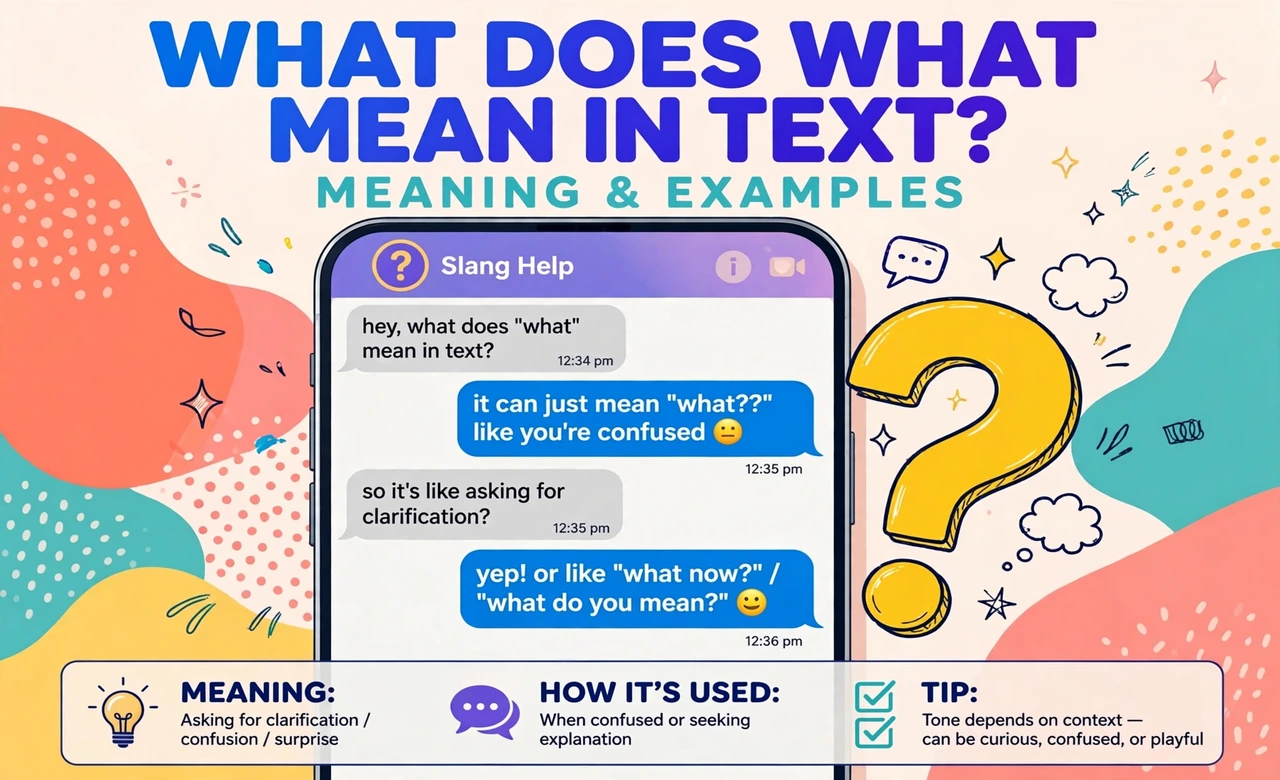
Ever received a message that simply says “WHAT?” and wondered whether the person is confused, surprised, annoyed, or just joking? You’re not alone. The WHAT meaning in text isn’t always as straightforward as it seems. A simple “what?” can sound completely different from “WHAT?!” or “whattt,” depending on the conversation.
In texting and social media chats, punctuation, capital letters, and emojis can change the tone of this everyday word. Whether someone sends you “WHAT” on Snapchat, Instagram, WhatsApp, or in a private conversation, understanding the context makes all the difference.
In this guide, we’ll explain what WHAT means in texting, explore real chat examples, uncover its different meanings, and show you how to respond naturally without making the conversation awkward.
What Does WHAT Mean in Text?
At its most fundamental level, WHAT meaning in text serves as a direct reaction word used to express shock, show genuine confusion, ask for clarification, or signal total disbelief. While the standard dictionary defines it as an interrogative pronoun, in texting slang and modern digital culture, it functions largely as an emotional barometer.
When someone fires off a fast “WHAT” in online conversations, they are rarely conducting an academic inquiry. Instead, they are processing an unexpected piece of data. Text messaging thrives on brevity, and typing four capital letters is the fastest way for a sender to capture a dramatic gasp, a dropped jaw, or an urgent demand to repeat what was just said.
Modern text message interpretation relies heavily on subtle structural markers. The intended meaning of “WHAT” shifts depending on whether it stands alone, carries punctuation, or appears in a particular channel:
- WHAT (All Caps, Isolated): Explosive shock, overwhelming excitement, or stunned disbelief.
- What? (Standard Punctuation): Genuine lack of understanding; requesting clarification or asking for information.
- What… (With Ellipsis): Deep bewilderment, hesitation, unease, or processing an awkward comment.
- WHAT?! (Interrobang / Mixed Marks): Outrage, intense astonishment, or feeling stunned by outrageous news.
- Whaaat / Whattt (Elongated Letters): Playful skepticism, teasing sarcasm, or lingering disbelief.
In mobile messaging, the word operates less as a formal inquiry and more as a real-time conversational pause button, urging the other person to explain, elaborate, or verify what they just delivered.
WHAT Meaning in Text Messages Explained
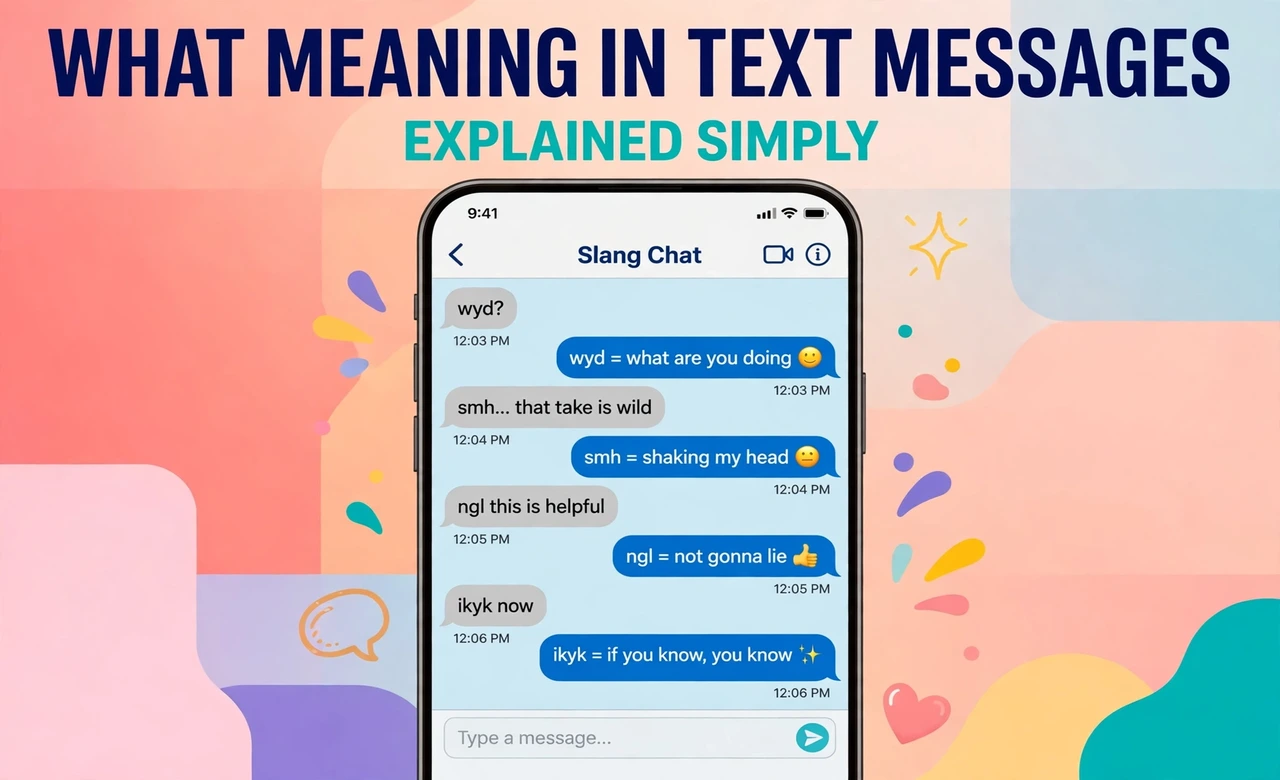
To truly parse what meaning in text messages carries across various platforms, we have to look past simple dictionary entries and explore how everyday communication evolved inside mobile screens.
       ┌────────────────────────────────────────────────────────┐
       │                DECODING "WHAT" IN TEXTS                │
       └───────────────────────────┬────────────────────────────┘
                                   │
         ┌─────────────────────────┼─────────────────────────┐
         ▼                         ▼                         ▼
   [LITERAL QUERY]         [EMOTIONAL SHOCK]        [SOCIAL FRICTION]
  Standard "What?"         All-caps "WHAT!"         Bare "what."
  • Needs clarity          • Stunned disbelief      • Flat irritation
  • Missed details         • Explosive hype         • Defensiveness
  • Simple question        • Drama or gossip        • Passive-aggressive
Is WHAT an Abbreviation or Just a Word?
A common question among those learning modern internet slang is: what does WHAT stand for?
“WHAT” is not an acronym or abbreviation. It does not stand for a hidden phrase like IDK (I don’t know), WDYM (What do you mean?), BRB (Be right back), or TBH (To be honest).
It is the standard English interrogative pronoun with roots tracing directly back to Old English (hwæt), which historically served as an exclamation used to call for attention or express surprise. In 21st-century chat messages, its traditional grammar rules often give way to expressive formatting. While some internet subcultures have spawned comedic backronyms over the years, in practical text replies, “WHAT” is strictly a plain word whose expressive power is modulated by typography, capitalization, and punctuation.
What Does WHAT Mean in Simple English?
In simple English, the word “what” is a question word used to ask about things, actions, facts, or identities.
| Dimension | Standard English Meaning | Texting & Digital Chat Meaning |
| Primary Function | Asking for information or identifying an object | Expressing an instantaneous emotional reaction |
| Grammar Role | Interrogative pronoun / Determiner | Reaction word, conversational interjection |
| Typical Context | Formal or structured queries (“What time is it?”) | Unfiltered reactions (“WHAT no way!”) |
| Tone Delivery | Relies on vocal pitch, cadence, and volume | Relies on capital letters, emojis, and repeated characters |
| Information Flow | Sincere request for missing facts | Signal to halt conversation and provide immediate proof |
When translated into texting habits, it retains its basic inquiry role while absorbing raw emotional tone. When a text says “what,” the sender is saying: “I either did not hear/understand your last thought, or what you just stated is so outside my realm of expectation that my brain is demanding an immediate reboot.”
What Does WHAT Mean When Someone Texts You?
When your screen lights up with a single-word message from an acquaintance, friend, or partner, how should you read their tone? Because mobile screens flatten inflection, you must inspect the typographic styling to discover the sender’s underlying mood.
What Does WHAT Mean in All Caps?
Seeing WHAT in all caps instantly changes the volume of a text. On the internet, capital letters are universally recognized as shouting or high-volume speech. However, shouting does not automatically equal hostility. In casual online chats, what does WHAT mean in capital letters? It signals high-intensity sensory processing.
- Jaw-Dropping Shock: You shared unexpected news or juicy gossip, and their immediate, visceral reaction is pure astonishment.
- Intense Excitement: You secured concert tickets, landed a major promotion, or booked a trip, and their caps convey unbridled joy.
- Sustained Disbelief: Something happened that defies logic, making the sender question if you are serious.
- Panic or Urgency: A sudden emergency or abrupt change of plans has triggered immediate alarm.
If your friend texts back “WHAT,” they haven’t turned hostile. Their hands are practically shaking over the keyboard as they process your update.
What Does “What??” Mean in a Text?
Punctuation in text replies acts as a proxy for facial expressions. When someone types a single question mark (“What?”), they are typically making a neutral, polite inquiry: “Could you clarify?” or “Did I miss something?”
Add a second question mark, however, and the dynamic changes:
"What?"   ───► Neutral clarification (Polite, attentive)
"What??"  ───► Double-take (Baffled, mildly skeptical, urgent)
"WHAT?!"  ───► Utter outrage or mind-blown disbelief
"What..." ───► Awkward pause, discomfort, or speechlessness
The double question mark functions like a social double-take. It shows that whatever was said sounded unusual, out of character, or slightly absurd. It communicates: “Excuse me? Did you seriously just say that?” or “Wait, I need you to double-check that statement because it makes no sense.”
When accompanied by laughing emojis (“What?? 😂”), it softens into affectionate amusement at an absurd statement. When left alone (“What??”), it suggests the recipient is genuinely puzzled or slightly defensive.
What Does WHAT Mean From a Girl?
Interpreting subtext in female texting styles often means paying close attention to contextual momentum, punctuation subtleties, and emoji pairings.
When a girl texts “WHAT” or “What”, her intended meaning generally falls into one of four distinct social categories:
                        ┌───────────────────────────────┐
                        │      "WHAT" FROM A GIRL       │
                        └───────────────┬───────────────┘
                                        │
      ┌──────────────────┬──────────────┴─────┬──────────────────┐
      ▼                  ▼                    ▼                  ▼
 [PURE HYPE]      [PLAYFUL SKEPTICISM]   [COLD DISTANCE]   [TOTAL CONFUSION]
 "WHATTT 😭✨"       "Wait what haha"       "what."            "What do you mean?"
  Shared tea/drama   Flirty banter          Boundary/upset     Missing context
- High-Energy Investment (“WHATTT” or “NO WHAT”): If she types elongated versions like “WHATTT” paired with crying-laughing faces, skull emojis, or exclamation points, she is matching your energy. She finds the topic fascinating, scandalous, or downright hilarious. She wants all the details right now.
- Playful Teasing or Flirtatious Feigning: If you offer an unexpected compliment or drop a bold line, she might respond with “what haha” or “Wait what? lol”. Here, the question word is a playful deflection. She heard you loud and clear; she wants you to lean in, repeat it, and own your flirtation.
- Cold Boundary or Irritation (“what.”): When the word is written in all-lowercase with a hard period at the end—or delivered as a curt, isolated reply to something uncalled for—it signals social friction. It means: “You crossed a boundary, said something offensive, or made an assumption you need to walk back immediately.”
- Direct Inquiry: If you send an ambiguous picture, video link, or cryptic inside joke, a simple “What is this?” or “What?” is an ordinary request for clarification.
Read more:YN Meaning in Text: What It Stands For and How to Use It
What Does WHAT Mean From a Guy?
Text patterns from guys tend to follow pragmatic, direct communication conventions, though emotional cues surface through abbreviations, slang variants, and punctuation habits:
- Literal Request for Facts: Men frequently use text messaging as an exchange tool rather than a social lounge. If a guy replies with “What?” or “What did you say?”, he likely missed a detail, didn’t understand an ambiguous reference, or needs you to state your point clearly without subtext.
- Broader Shock and Hype: In sports chatter, gaming groups, or casual banter, a guy replying with “WHAT” or “YOOOO WHAT” indicates total shock. An underdog team won, an insane highlight occurred, or unexpected drama dropped. It reflects an instinctive cheer or gasp.
- Guarded Confusion (“Wait what”): When a conversation veers into complex emotional dynamics or sudden relationship changes, guys often rely on the low-stakes phrase “wait what”. It buys processing time, signaling that he feels out of the loop and needs a moment to catch up to your thought process.
- Defensive Reaction (“What did I do?”): If a conversation is tense and he sends a standalone “What?”, he may feel unfairly accused or caught off guard by perceived hostility.
WHAT Meaning in Text From Your Crush
When your crush texts you “WHAT”, your heart skips a beat. Because feelings are on the line, every letter feels pregnant with hidden subtext. Decoding this relies on where your dynamic currently stands.
┌─────────────────────────────────────────────────────────────────────────┐
│                        CRUSH CONVERSATION MATRIX                        │
├───────────────────┬────────────────────────────┬────────────────────────┤
│ Text Format       │ Likely Subtext             │ Strategic Reply        │
├───────────────────┼────────────────────────────┼────────────────────────┤
│ "WHATTT no way 🙈"│ Flattered, engaged, curious│ Double down on banter  │
│ "wait what? haha" │ Intrigued, wants validation│ Deliver the compliment │
│ "What? 🤔"        │ Genuinely confused         │ Clarify simply         │
│ "what" (slow reply│ Uninterested or distracted │ Pivot or give space    │
└───────────────────┴────────────────────────────┴────────────────────────┘
- The Compliment Check: You drop a hint that you find them attractive or that you noticed something special about them. They reply: “Wait what? haha” or “WHAT?? 😂”. They aren’t confused; they are flattered. They want to hear you say it again to confirm your interest.
- Shared Intimacy through Drama: You share a crazy update from your personal life, and they hit you with an instant “WHAT?! Tell me everything right now.” This indicates high social investment. They value your updates and prioritize fast engagement.
- The Accidental Cryptic Message: If you sent an awkward meme or half-baked thought and they send back an ambiguous “What?”, do not spiral. They simply missed your intended meaning. Avoid sending five consecutive explanatory texts; clarify cleanly and keep your cool.
What Does WHAT Mean on Snapchat?
Snapchat has its own communication ecosystem driven by visual context, disappearing media, snaps, and quick chat overlays. On Snapchat, WHAT relies on the visual anchor backing the text.
[ SNAP IMAGE / VIDEO ]  ───►  [ OVERLAY / CHAT: "WHAT" ]
         │                                    │
         ▼                                    ▼
Visible Background:                  Decoded Meaning:
• Bizarre public sighting      ───►  "Are you seeing this right now?!"
• Wild selfie / new look       ───►  "Did you actually just do that?!"
• Blank / black screen snap    ───►  Low-effort reply / passive confusion
- Story Replies: When someone views your Snapchat Story and sends an instantaneous chat saying “WHAT”, your post held shocking content—a surprise road trip, an extreme haircut, or an unexpected meetup. The platform’s fast mechanics turn the word into a spontaneous high-five or jaw-drop.
- Snaps With Text Overlays: If a friend sends a snap of something absurd unfolding in public with the word “WHAT” plastered across the middle in classic white font, it acts as a surrogate for: “Look at this madness. I have zero words.”
- Blank Snaps with “What”: If you receive a blank or ceiling snap with a tiny “what”, the person opened your snap, found it illegible, confusing, or quiet, and is pinging you back with minimal effort to find out what you intended to say.
WHAT Meaning on Instagram and TikTok
On algorithmic, public-facing social media platforms, communication shifts from private dialogue to cultural commentary and performance.
What Does WHAT Mean in Instagram DMs?
Instagram DMs (Direct Messages) straddle the line between private conversations and social content sharing.
- Story Reactions: Replying to an Instagram Story with “WHAT” is an effortless way to express curiosity. People use it when an influencer announces a sudden brand drop, a friend posts hard-launch relationship photos, or someone shares an unbelievable life milestone.
- Reel Sharing: If you send an outrageous or comedic Reel to a friend and they write “WHAT DID I JUST WATCH”, the word anchors their entertainment. It highlights that the video bypassed their expectations and entered the realm of pure internet absurdity.
What Does WHAT Mean in TikTok Comments?
In fast-moving TikTok comment sections, the word operates as meme language, emotional shorthand, and a community rallying cry:
"WHAT THE HELL 💀"        ───► Shock at an unhinged plot twist
"wait what..."            ───► Noticing an unsettling background detail
"bro really said what"    ───► Clowning the creator's spoken logic
"WHATTTTT"                ───► Pure fangirl/fanboy excitement
- Spotting Background Details: TikTok users love forensic viewing. A comment reading “Wait what was that in the background at 0:04??” directs collective attention toward hidden oddities.
- The Plot Twist Climax: When a narrative video ends on an unhinged revelation, you will see thousands of one-word comments reading simply: “WHAT”. It signifies shared viewer shock.
- Satirical Disbelief: When paired with the skull emoji (“WHAT 💀”), it captures secondhand embarrassment, chaotic cringe, or gut-busting humor at someone’s awkward public behavior.
WHAT Meaning on WhatsApp and Messenger
WhatsApp and Facebook Messenger dominate international, professional, cross-generational, and family messaging. Consequently, decoding tone requires understanding who sits on the other side of the encrypted line.
- Cross-Generational Disconnects: Parents, older relatives, or senior colleagues often use texting tools literally. If a relative replies to an update with an isolated “What”, do not assume irritation. They often omit emojis, exclamation marks, or pleasantries out of practical habit. To them, “What” merely means “I did not follow that, please clarify.”
- The Instant Voice Note Catalyst: In many regions, a WhatsApp text reading “WHAT… okay wait check your voice notes” signals that the written word can no longer support the weight of the drama. A voice memo is inbound.
- Professional Workgroup Context: On platforms like Messenger, WhatsApp Work groups, or Slack, a curt “What?” can introduce workplace tension. Professional communication standards lean on polished phrases like “Could you elaborate on that?” or “Could you provide more context?” In these spaces, a bare “What?” reads as impatient, dismissive, or rushed.
Different Meanings of WHAT Based on Context
The English language relies on context, and digital messaging amplifies this need tenfold. Let us systematically break down the primary communicative roles this versatile word plays across daily exchanges.
┌────────────────────────────────────────────────────────────────────────┐
│                   CONTEXTUAL SPECTRUM OF "WHAT"                        │
├────────────────────┬─────────────────────────────┬─────────────────────┤
│ Emotional Context  │ Visual / Structural Cues    │ Core Intention      │
├────────────────────┼─────────────────────────────┼─────────────────────┤
│ Shock / Surprise   │ WHATTT, WHAT?!, 🤯, 😱      │ Disbelief, hype     │
│ Anger / Irritation │ what., WHAT, period, no pic │ Hostility, boundary │
│ Clarification      │ What?, What do you mean?    │ Missing info        │
│ Playful Sarcasm    │ Whaaaat nooo, what haha     │ Teasing banter      │
│ Hesitation         │ What..., wait what          │ Suspicion, caution  │
└────────────────────┴─────────────────────────────┴─────────────────────┘
WHAT Used to Express Confusion or Surprise
Surprise is the most common emotional trigger behind the word. When unexpected information arrives, humans experience a brief freeze response. In chat, that freeze produces a short text:
- “Wait, what? You’re moving to London?!”
- “WHAT?? I literally just spoke to him yesterday!”
Here, the sender does not doubt your honesty; their brain simply needs extra seconds to assimilate the update. The word serves as an emotional bridge between hearing news and forming a thoughtful response.
WHAT Used to Show Anger or Disbelief
Under tense circumstances, the word becomes confrontational. When someone feels betrayed, disrespected, or deeply offended, the text turns sharp:
- “You did WHAT behind my back?”
- “What. Are you serious right now?”
The addition of a rigid period (“What.”) or capitalization tucked inside an accusatory sentence transforms the term from an exploratory question into an aggressive demand for accountability. It signals: “Explain yourself before this escalates.”
WHAT Used as a Question or Request for Clarification
Not everything in modern texting carries complex emotional weight. Often, people type it because they missed a point:
- “Sorry, what? Bad connection.”
- “What was that address again?”
In fast-paced, multi-person group chats on platforms like Discord or WhatsApp, messages fly by in seconds. A quick “what did i miss?” or “what?” is a simple, functional request for someone to catch them up.
Real-Life Examples of WHAT in Text Conversations
Seeing texts situated in real-world dialogue shows how surrounding messages establish tone.
Casual Texting Examples With Friends
Scenario A: The Gossip Drop
Sarah: Jordan and Taylor just broke up at the dinner table.
Emma: WHAT
Emma: ARE YOU SERIOUS
Sarah: Swear to god. Taylor just walked out.
Emma: WHATTTT call me right now
Analysis: Emma’s capitalized replies are not angry; they demonstrate intense curiosity and shared drama.
Scenario B: The Group Plan Confusion
Marcus: Meet at the station by 6.
Liam: We said 7 yesterday though?
Marcus: What? Check the pinned message bro.
Analysis: Marcus’s “What?” is a neutral, functional double-check of their logistics.
Flirty and Dating Conversation Examples
Scenario A: The Unexpected Compliment
Alex: You looked ridiculously good in that black jacket tonight.
Chloe: wait what haha 🙈
Alex: You heard me. Total showstopper.
Chloe: stop it you’re sweet
Analysis: Chloe’s “wait what haha” is not confusion; it’s a receptive invitation for Alex to double down on his compliment.
Scenario B: The Teasing Accusation
Dan: I bet you’re terrible at Mario Kart.
Elena: WHAT?? Excuse you?!
Dan: Prove me wrong this Saturday then.
Analysis: Elena’s capitalized reaction plays along with Dan’s teasing banter, opening the door to a date.
Funny and Sarcastic WHAT Text Examples
Scenario A: Sarcastic Innocence
Mom: Did you eat the leftover cake in the fridge?
Leo: Whaaaat? Me? Never… 😇
Analysis: Elongating the word into “Whaaaat” signals self-aware guilt and comedic innocence.
Scenario B: Internet Meme Irony
Jake: My cat just ate an entire head of lettuce.
Sam: what even is your life 💀
Analysis: “What even” is a popular internet slang variation showing humorous disbelief at absurd circumstances.
How to Reply When Someone Texts WHAT
Staring at a single-word text can leave you wondering how to respond without making things awkward. Match your reply to the sender’s apparent emotional state.
                               ┌───────────────────────────┐
                               │   THE SENDER TEXTS "WHAT" │
                               └─────────────┬─────────────┘
                                             │
             ┌───────────────────────────────┼───────────────────────────────┐
             ▼                               ▼                               ▼
       [THEY ARE SHOCKED]            [THEY ARE CONFUSED]             [THEY ARE UPSET]
      "I know right?!"               Reword your point simply        "Let's clear the air:
      Drop the full story            Clarify with details             what I meant was..."
- When They Are Shocked: If they sent “WHAT” to surprising news, validate their shock immediately. Double down on details: “I KNOW. I couldn’t believe it either!” or “Right?! Call me, I have the whole story.”
- When They Are Confused: If your previous text was vague or poorly worded, don’t just resend the identical sentence. Rephrase it cleanly: “Sorry, auto-correct ruined that. I meant to ask if you’re coming tonight.”
- When They Are Defensive or Angry: If their “What?” sounds frosty, do not escalate. Clarify your intentions calmly: “I feel like my last text came off wrong. What I meant was…”
- When They Are Bantering Flirtatiously: If they sent a playful “What? 😏”, lean into the tension: “You heard me,” or “Don’t make me repeat myself, it’s bad for my ego.”
Best Replies to WHAT From a Friend or Crush
- “I literally reacted the exact same way when I found out.”
- “Don’t ‘what’ me, you know exactly what I’m talking about! 😂”
- “Check your mic/eyes, you read that correctly.”
- “I’m not repeating it, scroll up and read it again!”
- “Pick up your phone, this requires a voice memo.”
Difference Between WHAT, WUT, WAT and WDYM
Digital conversations have produced several phonetic spellings, informal expressions, and texting abbreviations for the word. Understanding their nuanced differences keeps your messaging natural and socially calibrated.
┌────────────────────────────────────────────────────────────────────────┐
│                        "WHAT" VARIANT MATRIX                           │
├─────────┬──────────────────────┬──────────────────────┬────────────────┤
│ Variant │ Primary Vibe / Tone  │ Best Context         │ Energy Level   │
├─────────┼──────────────────────┼──────────────────────┼────────────────┤
│ WHAT    │ Direct, loud, shock  │ Breaking news, drama │ High / Urgent  │
│ Wut     │ Bemused, quirky      │ Absurd memes, casual │ Laid-back      │
│ Wat     │ Sarcastic, internet  │ Surreal shitposts    │ Neutral / Flat │
│ WDYM    │ Direct inquiry       │ Misunderstandings    │ Conversational │
│ Whattt  │ Dramatic, invested   │ Gossip, dating       │ High / Playful │
└─────────┴──────────────────────┴──────────────────────┴────────────────┘
WHAT vs. WUT
“Wut” is an informal, phonetic respelling born out of early SMS texting and gaming forums. Unlike the authoritative, high-energy impact of “WHAT”, wut conveys relaxed bewilderment. When a friend texts “wut”, they aren’t angry; they find something silly, weird, or mildly confusing. It carries a shrug-like demeanor.
WHAT vs. WAT
Similar to wut, “wat” emerged from classic internet meme culture (often paired with surreal reaction images, such as the famous meme of an old woman in a garden). It highlights situations so bizarre that normal grammar breaks down. It indicates: “This makes so little sense that it doesn’t even deserve an ‘h’.”
WHAT vs. WDYM
WDYM is a formal texting acronym that stands for “What Do You Mean?” While “WHAT” functions as a raw exclamation, “WDYM” is a direct request for logical elaboration. When someone texts WDYM, they are asking you to unpack an ambiguous statement, unpack an emotional admission, or clear up an unclear plan.
Is WHAT Rude or Disrespectful in Texting?
A frequent source of anxiety in digital etiquette is whether replying with a standalone “What?” is bad manners.
The honest answer: It can easily come across as rude, depending on the audience and medium.
Without vocal warmth, a solitary “What” or “What?” hits the reader’s screen like a cold, abrupt wall. In professional and workplace contexts, replying to an email, Slack ping, or team thread with just “What?” often sounds dismissive, blunt, or outright hostile. It implies that the sender has wasted your time or said something unreasonable.
POOR ETIQUETTE (Work / Formal):
Colleague: "We need to push the deployment back two days."
You:       "What." ───► (Reads as aggressive, demanding, and abrasive)

BETTER ETIQUETTE:
You:       "What's driving the delay? Let's discuss."
In close friendships, casual dating, or informal family chats, a quick “what” carries far less risk. Friends understand each other’s baseline personalities and make generous assumptions about tone. However, when texting an acquaintance, a new romantic partner, or a work supervisor, avoid isolated one-word reactions. Soften the message with conversational cushions:
- “Wait, what do you mean?”
- “What was that? Missed that part!”
- “Sorry, could you explain that a bit more?”
Adding these small buffers keeps your messages friendly and protects you from unintended misunderstandings.
Why Do People Type WHAT Instead of What?
Why do millions of smartphone users take the deliberate step of toggling the Shift key or holding down Caps Lock to type WHAT instead of regular What?
Human speech relies heavily on pitch adjustments, volume spikes, and facial theatrics. When an astonishing event occurs in real life, your pitch jumps and your vocal chords push more air.
Texting on a glass screen strips away those biological features. Capitalizing every letter (WHAT) is the digital equivalent of that physiological reaction.
Furthermore, repeating letters (“WHATTT” or “WHAAAT”) mimics how a person elongates syllables when their brain is caught off guard. Modern mobile communication is not deteriorating English; it is dynamically evolving to ensure human emotion survives the journey through fiber-optic cables.
Common Mistakes When Interpreting WHAT in Texts
Because texting invites people to project their own internal insecurities onto ambiguous messages, misreadings happen every day. Here are the most common pitfalls to avoid:
- Assuming Capital Letters Always Equal Anger: Many people jump to the conclusion that all-caps messages signal hostility. In reality, over 80% of capitalized “WHAT” texts in social channels express surprise, humor, or excitement rather than rage.
- Overanalyzing Slow Responses: If someone sends “what” after a two-hour silence, do not assume they sat stewing in annoyance for 120 minutes. They were likely busy, glanced at their phone, got confused by your previous text, and quickly typed a one-word query on the go.
- Ignoring the Influence of Punctuation: A message reading “What?!” carries a radically different tone than “What…” or “What.” Never evaluate the four letters while ignoring the punctuation marks trailing behind them.
- Forgetting Generational Texting Styles: Younger generations often write in lowercase without terminal periods, viewing hard periods (“What.”) as signs of anger. Older generations often use periods simply because they follow formal grammar rules. Always evaluate the text through the sender’s individual texting habits.
Frequently Asked Questions (FAQs)
1. What Is Another Word for What?
Depending on the sentence, alternatives to “what” include “which,” “whatever,” and “which thing.” However, these words have different uses and cannot always replace “what.”
2. What Is the Full Meaning of What’s?
“What’s” is a contraction of “what is” or “what has” in English. For example, “What’s your name?” means “What is your name?” while “What’s happened?” means “What has happened?”
3. What Is What in English Grammar?
In English grammar, “what” can function as an interrogative pronoun, determiner, or exclamative word. It is commonly used to ask questions, request information, or express surprise.
4. What Is the Urdu Meaning of “What”?
The Urdu meaning of “what” is “کیا” (Kya), commonly used when asking questions. For example, “What is your name?” translates to “آپ کا نام کیا ہے؟” in Urdu.
Conclusion
The WHAT meaning in text is simple, but the message behind it can change depending on how someone uses it. While “what” usually asks a question or seeks clarification, it can also express surprise, confusion, disbelief, excitement, or even frustration. A casual “what?” might be harmless, while “WHAT?!” or “whattt” can carry a completely different tone.
Whether you’re chatting on WhatsApp, Snapchat, Instagram, or TikTok, pay attention to punctuation, emojis, and the surrounding conversation before jumping to conclusions. Understanding what WHAT means in texting can help you avoid misunderstandings and respond with confidence.
So, the next time someone texts you “WHAT,” don’t overthink the word itself. Look at the context, understand the tone, and choose a reply that keeps the conversation flowing naturally.

Welcome to NameInBible. I am Victoria, a Christian writer passionate about exploring biblical name meanings, Scripture-based insights, and powerful prayers. My goal is to help readers discover the spiritual significance of names and grow closer to God through faith-filled content.