
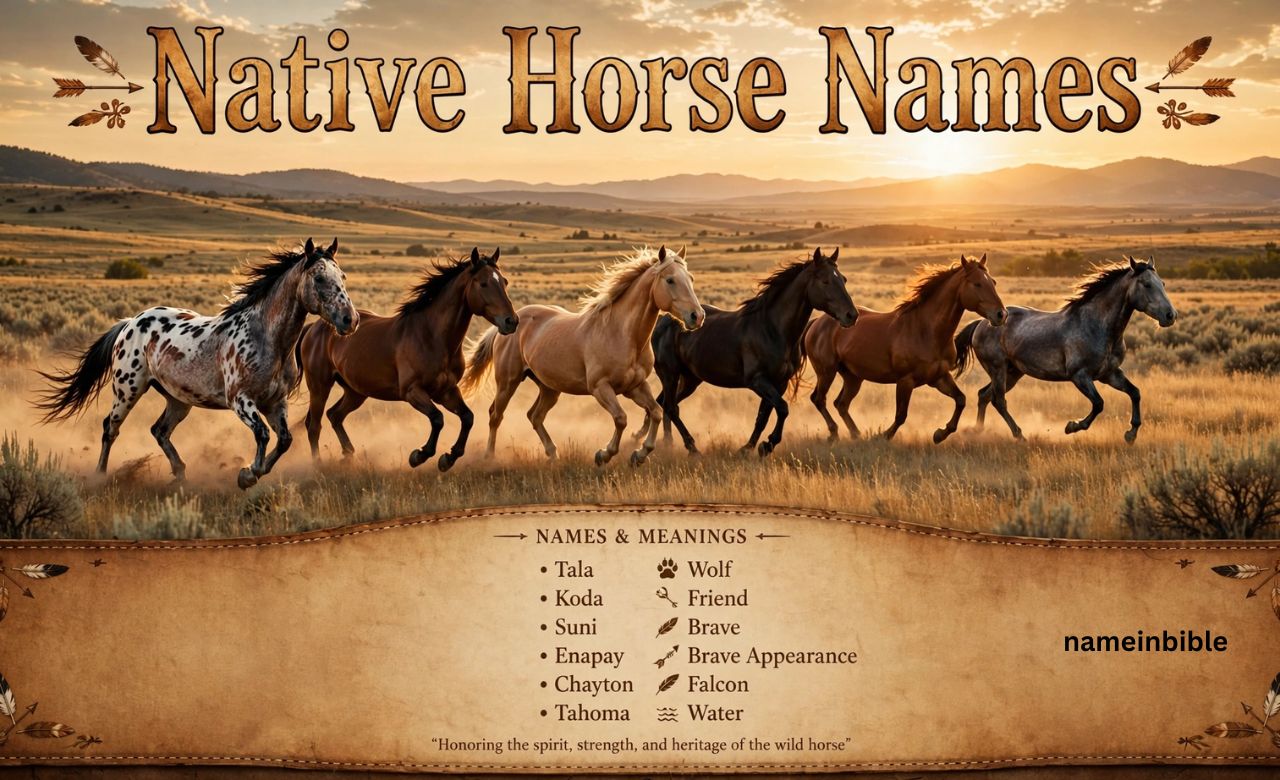
The perfect horse deserves a name that reflects its strength, spirit, and legacy. Whether you’re searching for powerful Indian horse names, authentic Native American horse names, meaningful Native American names for horses, inspiring Cherokee horse names, or timeless Indian names for horses, you’ll find the perfect match here.
This carefully selected collection features names Native Horse Names inspired by fearless warriors, sacred traditions, breathtaking landscapes, and the deep wisdom of Native cultures. Start exploring and give your horse a name with a story, a purpose, and a lasting meaning.
Best Native American Horse Names for Every Horse
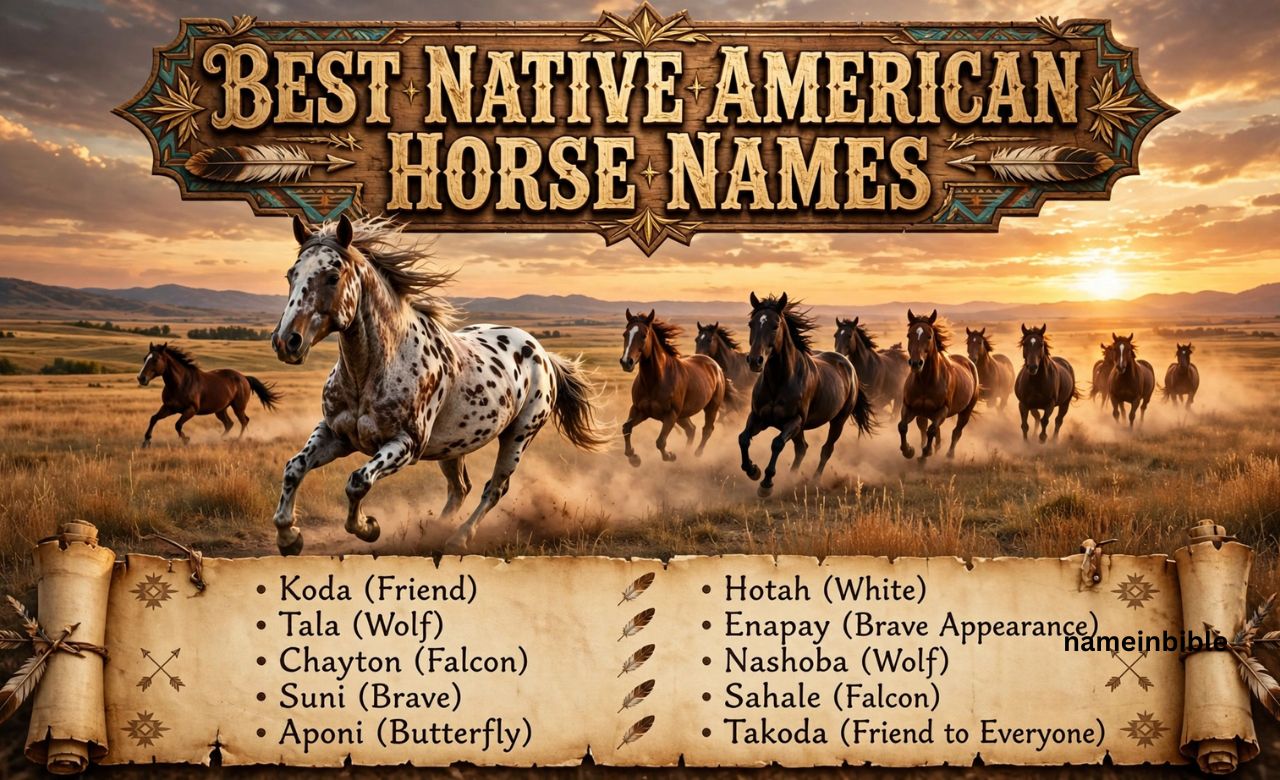
Whether you ride a bold Quarter Horse, a spirited Mustang, a spotted Appaloosa, or a graceful Paint, these foundational naming options offer timeless strength, grace, and heritage across various Native American Indian languages.
- Ahanu: Algonquin — “He laughs” (Ideal for a playful gelding or gelding with a spirited personality).
- Aiyana: Cherokee — “Forever flowering” or “Eternal blossom”.
- Dakota: Sioux — “Friend” or “Ally”.
- Denali: Koyukon Athabaskan — “The Great One”.
- Elu: Zuni — “Beautiful” or “Full of grace”.
- Koda: Lakota/Sioux — “Little friend” or “Companion”.
- Maka: Sioux — “Earth”.
- Nantan: Apache — “Leader” or “Spoken chief”.
- Takoda: Sioux — “Friend to everyone”.
- Waban: Algonquian — “Dawn” or “East wind”.
┌─────────────────────────────────────────────────────────────┐
│                    NAME PROFILE HIGHLIGHT                   │
├──────────────────────────────┬──────────────────────────────┤
│ Name                         │ Koda                         │
│ Pronunciation                │ KOH-dah                      │
│ Linguistic Origin            │ Lakota / Dakota              │
│ Primary Meaning              │ Friend / Ally                │
│ Ideal Equine Traits          │ Loyal, gentle, affectionate  │
└──────────────────────────────┴──────────────────────────────┘
Strong Native Horse Names for Male Horses
For stallions, colts, and geldings that exhibit raw power, noble leadership, and command respect in the arena or on the trail, these male Native horse names convey deep authority.
- Bidziil: Navajo — “He is strong”.
- Dasan: Chief — “Leader” (Navajo/Pima origin).
- Enapay: Sioux — “Appears bravely” or “Steps out without fear”.
- Honovi: Hopi — “Strong deer”.
- Kitchi: Algonquin — “Brave” or “Great”.
- Makya: Hopi — “Eagle hunter”.
- Mato: Sioux — “Bear” (symbolic of heavy strength).
- Ohitekah: Lakota — “Brave” or “Courageous warrior”.
- Paytah: Sioux — “Fire”.
- Viho: Cheyenne — “Chief” or “Leader”.
Beautiful Native Horse Names for Female Horses
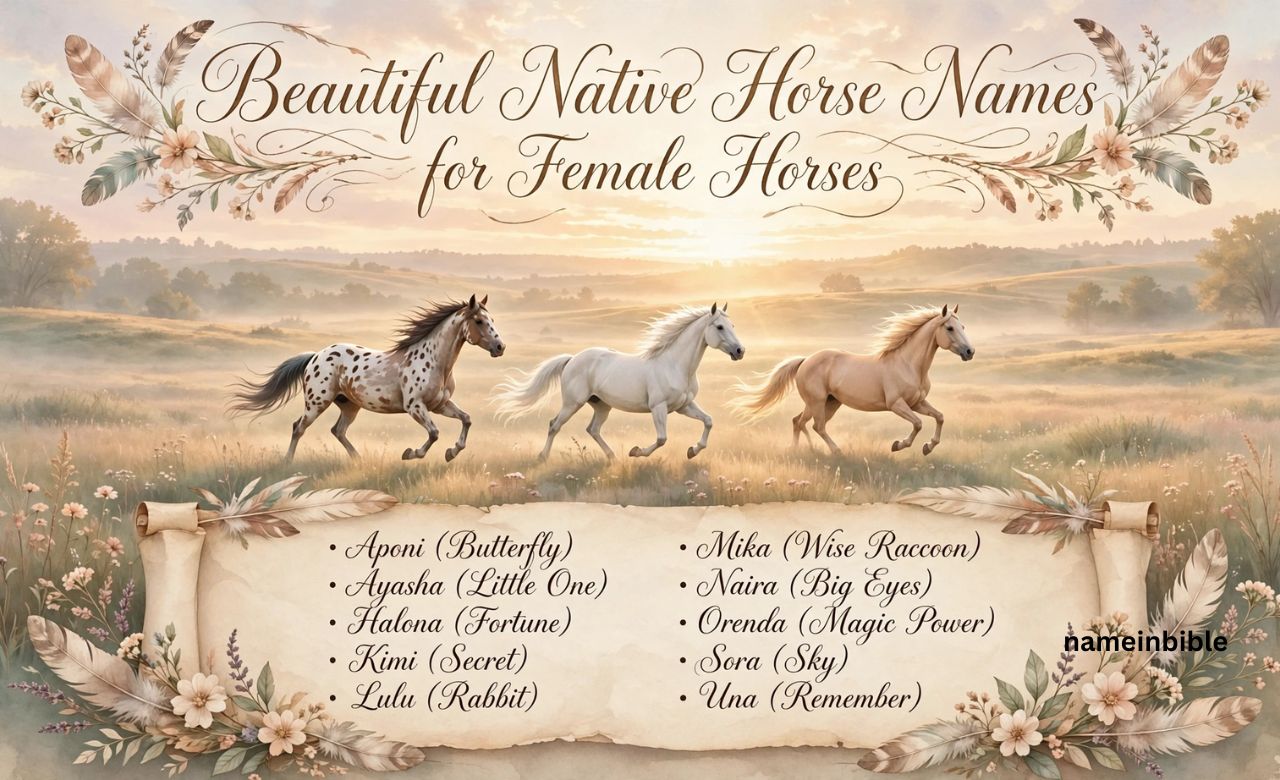
Mares and fillies possess an extraordinary mix of grace, intuition, resilience, and swiftness. These female tribal horse names reflect natural beauty and quiet strength.
- Adsila: Cherokee — “Blossom” or “Flower”.
- Ayita: Cherokee — “First to dance”.
- Galilahi: Cherokee — “Attractive” or “Gracious”.
- Halona: Native American — “Happy fortune”.
- Kaya: Hopi — “Pure” or “Elder sister”.
- Nizhoni: Navajo — “Beautiful” or “Goodness”.
- Sakari: Inuit — “Sweet”.
- Talulah: Choctaw — “Leaping water”.
- Tehya: Native American — “Precious”.
- Winona: Sioux — “First-born daughter”.
Traditional Cherokee Horse Names and Their Meanings
The Cherokee nation (Tsalagi) holds a rich oral tradition closely tied to nature, wildlife, and geography. Cherokee horse names are among the most popular choices for Western and trail horses.
- Ama: Cherokee — “Water” (suited for a horse with a smooth, fluid stride).
- Atohi: Cherokee — “Woods” or “Forest”.
- Awenasa: Cherokee — “My home”.
- Inali: Cherokee — “Black fox” (stunning for dark or black horses).
- Kanati: Cherokee Mythology — “First man” or “The Hunter”.
- Selu: Cherokee Mythology — “Corn” or “Mother/Goddess of the Harvest”.
- Wahya / Waya: Cherokee — “Wolf”.
- Walela: Cherokee — “Hummingbird” (perfect for small, nimble colts or fillies).
- Wesa: Cherokee — “Cat” or “Puma”.
Apache Horse Names Inspired by Courage and Strength
The Apache peoples (including the Chiricahua and Mescalero) were world-renowned equestrians, famed for their endurance, tactics, and unbreakable bond with their mounts.
- Cochise: Named after the formidable Chiricahua Apache leader symbolizing wisdom and resilience.
- Dahteste: Named after the famous Apache woman warrior who fought alongside Geronimo.
- Dohasan: Apache — “Little bluff”.
- Geronimo: Named after the legendary Apache leader; ideal for a bold, fearless horse with a fiery spirit.
- Lozen: Named after the skilled Apache warrior woman, prophet, and dextrous horse thief.
- Nantan: Apache — “Chief” or “Spoken leader”.
Sioux Horse Names with Deep Cultural Meanings
To the Lakota, Dakota, and Nakota peoples (collectively known as the Sioux), horses Native Horse Names were sacred relatives. Lakota horse names carry deep spiritual resonance and connection to the Great Plains.
| Name | Meaning | Cultural Resonance |
| Akichita | Warrior / Protector | Suited for a protective, vigilant gelding. |
| Cetan | Falcon / Hawk | Ideal for a fast horse with keen eyes. |
| Chante | Heart | Perfect for a horse with immense chest capacity and courage. |
| Chaska | Eldest Son | Traditional naming convention for the first male colt. |
| Mahpiya | Sky / Cloud | Great for a light gray or roan horse. |
| Tasunke | His Horse | Root word found in Tasunke Witko (Crazy Horse). |
| Tatanka | Bull Buffalo | Powerful moniker for a bulky, heavy-set draft cross or stallion. |
| Tokala | Kit Fox | Excellent for a quick, intelligent, sorrel-colored horse. |
| Wambli | Golden Eagle | Associated with high flight and noble status. |
Navajo Horse Names Inspired by Nature
The Navajo (Diné) nation possesses a rich culture deeply interwoven with the landscape of the American Southwest. Navajo horse names reflect the canyons, red rocks, sky, and elements.
- Aditsan: Navajo — “Listener” (great for a sensitive, highly trainable horse).
- Bidziil: Navajo — “He is strong”.
- Gaagii: Navajo — “Raven” (suited for a shiny, solid black coat).
- Kai: Navajo — “Willow tree” (gentle, flexible, resilient).
- Ma’ikoh: Navajo — “Wolf”.
- Niyol: Navajo — “Wind” (ideal for a swift racehorse or endurance trail mount).
- Shiye: Navajo — “Son”.
- Shilah: Navajo — “Brother”.
- Yazhi: Navajo — “Little one”.
Warrior Native Horse Names for Brave Stallions
If your horse displays fearless drive, athletic command, and an indomitable will, these warrior-inspired names honor legendary fighters, chiefs, and tribal protectors.
- Akando: Native American — “Ambush” or “Concealed strength”.
- Black Hawk: Sauk war leader known for his courage and resistance.
- Crazy Horse (Tasunke Witko): Legendary Oglala Lakota war leader known for his unyielding valor.
- Hototo: Hopi — “Spirit warrior” or “He who sings”.
- Kaga: Sioux — “Fierce” or “Challenger”.
- Otaktay: Sioux — “Kills many” or “Son of a warrior”.
- Red Cloud: Famous Oglala Lakota leader who successfully fought for control of the Powder River Country.
- Tecumseh: Shawnee chief whose name translates to “Panther in the Sky” or “Shooting Star”.
- Wakiza: Native American — “Desperate warrior” or “Determined fighter”.
Spiritual Native Horse Names Inspired by Ancient Traditions
Equine companions often feel like soulmates rather than mere domestic animals. These sacred, spiritual horse names honor ancient traditions, celestial bodies, and unseen forces.
- Achak: Algonquin — “Spirit”.
- Alo: Hopi — “Spiritual guide”.
- Catori: Hopi — “Spirit”.
- Chepi: Algonquin — “Ghost” or “Fairy-like spirit”.
- Orenda: Iroquois — “Magical power” or “Extraordinary spiritual energy”.
- Wakanda: Omaha/Osage/Ponca — “Creator God” or “Sacred power”.
- Wakan Tanka: Lakota — “The Great Spirit” or “The Sacred Mysterious”.
- Wicapi / Wichahpi: Lakota/Sioux — “Star”.
- Wakinyan: Lakota Mythology — “Thunderbird” (a sacred spirit that controls rain and thunder).
Nature-Inspired Native Horse Names
Native American languages reflect a deep awareness of the natural world, drawing rich vocabulary from flora, fauna, weather, and topography.
Wildlife-Inspired Names
- Abooksigun: Algonquin — “Wildcat”.
- Dyami: Native American — “Eagle”.
- Elsu: Algonquin — “Flying falcon”.
- Mingan: Algonquin — “Grey wolf”.
- Makwa: Algonquin — “Bear”.
- Nita: Choctaw — “Bear”.
Elemental & Landscape Names
- Hassun: Algonquin — “Stone” or “Rock”.
- Kiona: Sahaptin — “Brown hills”.
- Nodin: Ojibwe — “Wind”.
- Pavati: Hopi — “Clear water”.
- Tate: Sioux — “Wind”.
Unique Indigenous Horse Names You Will Love
If you are looking for rare horse names that stand apart in the barn while remaining deeply rooted in heritage, consider these lesser-known gems:
- Aleshanee: Coo — “She plays all the time”.
- Anpa: Lakota — “Dawn”.
- Chenoa: Cherokee origin — “Dove”.
- Keme: Algonquin — “Thunder” or “Secret”.
- Namid: Ojibwe — “Star dancer”.
- Tadita: Omaha — “One who runs”.
Native Horse Names Based on Horse Colors
Matching a horse’s name to its physical appearance such as coat color, leg markings, or face blazes Native Horse Names is a traditional practice across many cultures.
┌─────────────────────────────────────────────────────────────┐
│                 COLOR-BASED NAMING MATRIX                   │
├───────────────┬────────────────────────────┬────────────────┤
│ Coat Color    │ Recommended Native Name    │ Language/Origin│
├───────────────┼────────────────────────────┼────────────────┤
│ Solid Black   | Inali (Black Fox)          │ Cherokee       │
│ Solid Black   │ Gaagii (Raven)             │ Navajo         │
│ Pure White    │ Hotah (White)              │ Lakota         │
│ Pure White    │ Istas (Snow)               │ Native American│
│ Brown/Chestnut│ Kiona (Brown Hills)        │ Sahaptin       │
│ Spotted/Paint │ Manetoa (Mottled/Patterned)│ Algonquin      │
└───────────────┴────────────────────────────┴────────────────┘
Powerful Native Horse Names for Black, White, and Brown Horses
Black Horses
- Chogan: Algonquin — “Blackbird”.
- Enoli: Cherokee — “Black fox”.
- Gaagii: Navajo — “Raven”.
- Inali: Cherokee — “Black fox”.
- Koko: Blackfoot — “Night” or “Night owl”.
White & Gray Horses
- Hotah: Sioux — “White”.
- Istas: Native American — “Snow”.
- Misae: Native American — “White sun”.
- Shahaka: Mandan — “Big white one”.
- Yas: Navajo — “Snow”.
Brown, Sorrel & Bay Horses
- Kiona: Sahaptin — “Brown hills”.
- Mahkah: Native American — “One with the earth”.
- Nita: Choctaw — “Bear” (brown coat).
Ancient Tribal Horse Names with Symbolic Meanings
These historical names carry symbolic weight, representing ancient mythologies, seasonal shifts, and cultural concepts.
- Iktomi: Lakota Mythology — The clever trickster spider spirit.
- Piasa: Illiniwek Mythology — “The bird that devours men” (symbolic of fierce protection).
- Sequoia: Named after the famous Cherokee scholar who created the Cherokee syllabary.
- Sitting Bull: Legendary Hunkpapa Lakota leader and holy man (Tatanka Yotanka).
- Waniyetu: Lakota — “Winter”.
Rare Native Horse Names That Stand Out
For owners who want a unique name that stands out in registration records and show grounds:
- Aiyana: Cherokee — “Forever flowering”.
- Ethete: Arapaho — “Good” or “Virtuous”.
- Gyhe: Cherokee — “Otter”.
- Siyotanka: Sioux — “Flute” or “Sweet sound”.
- Zyanya: Zapotec — “Forever” or “Always”.
How the Horse Arrived on the Plains
Native horses went extinct in North America around 10,000 years ago at the end of the Last Glacial Period. The animal returned when Spanish conquistadors brought Andalusian stock to Mexico and the American Southwest in the 16th century.
                     SPANISH SETTLEMENTS (1500s–1600s)
                                    │
                                    ▼
                         PUEBLO REVOLT OF 1680
       (Thousands of Spanish horses freed/captured in New Mexico)
                                    │
                                    ▼
                      INTERTRIBAL TRADE & RAIDING
      (Ute, Shoshone, Comanche spread horses northward & eastward)
                                    │
                                    ▼
                ADOPTION BY NORTHERN PLAINS TRIBES (1700s)
               (Lakota, Blackfoot, Crow, Cheyenne, Arapaho)
The Spanish Monopoly and the Pueblo Revolt
The Spanish strictly prohibited Indigenous people from riding or owning horses, using the animals as tools of intimidation and military dominance. However, the turning point came with the Pueblo Revolt of 1680, when Pueblo communities organized a coordinated uprising that successfully drove the Spanish out of Santa Fe for over a decade.
The revolt left behind thousands of Spanish horses. Pueblo traders traded these animals northward to neighboring tribes like the Ute, Shoshone, and Comanche.
The Great Spread Across the Plains
From the Southwest, horses spread rapidly through intertribal trade networks and raiding:
- Southern Plains (1680s–1700): The Comanche and Kiowa acquired horses early, quickly mastering horsemanship and controlling vast territories in present-day Texas, Oklahoma, and New Mexico.
- Northern Plains (1700–1750): The Shoshone brought horses northward to the Snake and Salmon Rivers, trading with or fighting against the Lakota, Crow, Blackfoot, Cheyenne, and Arapaho. By the mid-18th century, virtually every Plains nation was mounted.
2. The “Sacred Dog” (Šuŋka Wakáŋ)
Before horses, Plains tribes relied on domestic dogs to help pull heavy loads on wooden A-frame sleds called travois. Dogs could only pull around 30 to 50 pounds and required frequent rest, which severely limited how far and how quickly a camp could move.
When Plains people first encountered the horse, they viewed it as a large, mysterious, and powerful creature that performed the work of a dog but with vastly superior strength and speed. This is reflected in their naming of the animal across languages:
- Lakota: Šuŋka Wakáŋ (“Sacred Dog” or “Mysterious Dog”)
- Blackfoot: Ponokámitaa (“Elk Dog”)
- Cree: Mistatim (“Big Dog”)
3. How the Horse Transformed Daily Life
The introduction of the horse triggered a cultural revolution across the Great Plains, reshaping almost every aspect of tribal society.
┌──────────────────────────────┬──────────────────────────────────────────────────────────┐
│ ASPECT OF LIFE               │ TRANSFORMATION AFTER THE HORSE                           │
├──────────────────────────────┼──────────────────────────────────────────────────────────┤
│ Hunting                      │ Shifted from dangerous "buffalo jumps" to targeted,     │
│                              │ high-speed horseback hunts using bow and lance.          │
├──────────────────────────────┼──────────────────────────────────────────────────────────┤
│ Shelter & Mobility           │ Larger travois allowed horses to pull heavy poles,      │
│                              │ creating much larger, more spacious hide tipis.          │
├──────────────────────────────┼──────────────────────────────────────────────────────────┤
│ Wealth & Social Status       │ Horse herd size became the primary measure of wealth,    │
│                              │ generosity, and prestige within the community.          │
├──────────────────────────────┼──────────────────────────────────────────────────────────┤
│ Warfare & Raiding            │ Raiding for horses replaced territory wars, where        │
│                              │ honor was gained through bravery ("counting coup").      │
└──────────────────────────────┴──────────────────────────────────────────────────────────┘
Buffalo Hunting Efficiency
Before horses, hunting bison was a collective, dangerous effort—often involving driving herds into corrals or over cliffs (“buffalo jumps”). With horses, hunters could ride directly alongside a fleeing herd, selecting specific animals and bringing them down cleanly with a bow or lance. This provided an unprecedented surplus of meat, hides, and materials.
Greater Mobility and Larger Homes
A single horse could haul up to 300–500 pounds on a enlarged travois—ten times what a dog could carry. This enabled camps to carry longer wooden poles and more bison hides, transforming smaller, crowded shelters into large, comfortable lodge tipis. Bands could travel dozens of miles in a single day, following the seasonal migrations of bison herds.
Social and Economic Shifts
Horses became the primary form of currency and prestige on the Plains. A leader’s wealth was measured by the size of their herd, and possessing many horses allowed individuals to show generosity by gifting animals to widows, elders, and families in need.
Military Culture and “Counting Coup”
The horse altered Plains warfare into a mobile, highly tactical art form. Raiding rival herds to acquire mounts became a primary way for young warriors to demonstrate courage. Honor was earned not by killing enemies, but by performing acts of bravery under fire—such as touching an armed enemy with a stick or hand (“counting coup”) or stealing a prized warhorse tethered directly outside an opponent’s tipi.
How Horses Revolutionized Plains Indian Culture
This short documentary overview directly illustrates how Spanish horses spread to Plains tribes and how they fundamentally revolutionized hunting, mobility, and warrior traditions across the region.
How to Choose the Perfect Native Horse Name
Finding the ideal moniker requires balancing meaning, equine behavior, and practicality.
- Observe Your Horse’s Temperament: Is your horse fiery like Paytah (Fire) or serene like Ama (Water)?
- Test the Call Name: Choose a name that rolls off the tongue easily during training. Short names with two syllables (e.g., Koda, Mato, Tate) work best for daily barn calls.
- Honor Coat & Breed: Match colors or traits—such as naming a swift Mustang colt Niyol (Wind) or a spotted Appaloosa mare Namid (Star Dancer).
Common Mistakes to Avoid When Naming Your Horse
- Mispronouncing Sacred Words: Always verify the correct pronunciation and linguistic origin of Indigenous words.
- Using Sacred Religious Terms Insensitively: Avoid using holy titles or deity names in inappropriate contexts.
- Picking overly complex names: Ensure your horse’s call name is easy to pronounce clearly in emergencies.
Why Native Horse Names Are Popular Today
Native American horse names remain immensely popular because they connect owners directly to North American history, equestrian heritage, and the natural world. These meaningful horse names offer an authentic alternative to generic equine titles, celebrating strength, nobility, and the bond between horse and rider.
Frequently Asked Questions
What is a unique name for a horse?
A unique horse name reflects your horse’s personality, appearance, or heritage. Names like Takoda, Waya, Sequoia, Aponi, and Koda are memorable and meaningful choices.
What is the Punjabi name for horse?
The Punjabi word for horse is Ghora (ਘੋੜਾ) for a male horse and Ghori (ਘੋੜੀ) for a female horse. These are the most commonly used names in Punjabi.
What is a good name for a wild horse?
A good wild horse name captures freedom, strength, and nature. Popular choices include Spirit, Thunder, Storm, Dakota, Waya, Blaze, Canyon, and Ranger.
What are the top 10 horse names?
Some of the most popular horse names are Spirit, Bella, Star, Dakota, Thunder, Scout, Maverick, Shadow, Luna, and Blaze. These names are timeless and suit many horse breeds and personalities.
Conclusion
Choosing the right horse name is a meaningful way to honor your horse’s personality, strength, and heritage. Whether you prefer traditional Indian horse names, inspiring Native American horse names, meaningful Native American names for horses, classic Cherokee horse names, or unique Indian names for horses, the perfect name can create a lasting connection between you and your horse.
Pick a name with a story and meaning, and let it celebrate your horse’s beauty, courage, and free spirit for years to come.Read other article 555 Meaning in the Bible: What God Is Telling You Through This Powerful Number

Welcome to NameInBible. I am Victoria, a Christian writer passionate about exploring biblical name meanings, Scripture-based insights, and powerful prayers. My goal is to help readers discover the spiritual significance of names and grow closer to God through faith-filled content.