

Throughout the Old and New Testaments, divine communication extends far beyond literal prose. Scripture is rich with covenantal symbols, spiritual typologies, prophetic numbers, and divine attributes intended to reveal the nature of the Creator. From the majestic descriptions of heavenly beings to the precise numerology woven through creation and prophecy, understanding biblical symbolism enriches our engagement with God’s Word.
Whether you are seeking theological clarity on complex biblical concepts, exploring the scriptural significance of recurring numbers, or searching for faith-filled verses to inspire your daily life, this comprehensive pillar directory unpacks the biblical meanings, sacred symbols, and devotional practices grounded in Scripture.
What Is Biblical Symbolism in Scripture?
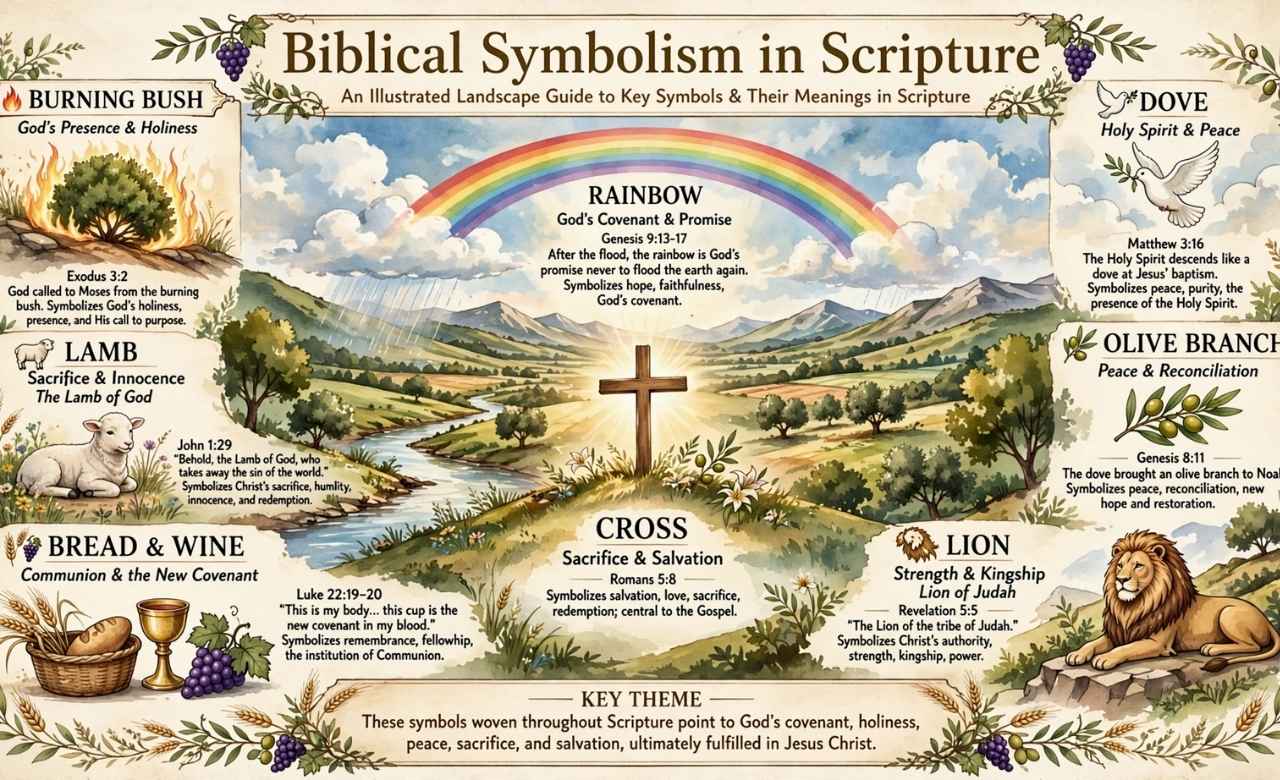
Biblical symbolism refers to the use of objects, numbers, places, colors, events, and images to communicate deeper spiritual or theological ideas. The Bible often uses ordinary things to point readers toward important truths about God, faith, judgment, redemption, wisdom, and spiritual transformation.
For example, light can symbolize God’s presence, truth, or righteousness, while darkness may represent sin, ignorance, or judgment depending on the passage. Water can represent cleansing, life, judgment, or spiritual renewal.
Understanding symbolism requires looking at the context of Scripture rather than assigning one fixed meaning to every symbol. A symbol can have different meanings in different passages.
The safest approach is to examine the surrounding verses, the historical setting, the literary genre, and other biblical references before drawing a conclusion.
Sacred Biblical Numerology & Angelic Numbers
In ancient Hebrew and biblical thought, numbers frequently carried spiritual weight beyond simple mathematical counts. Certain numbers recur at critical junctures of redemptive history, pointing believers toward divine order, grace, and completion.
- Grace and Goodness: The number five stands prominently in Scripture as an emblem of divine favor, holy tabernacle architecture, and covenantal mercy; explore our theological study on the number 5 meaning in the Bible.
- Divine Alignment and New Beginnings: Often observed as a recurring pattern in modern spiritual reflection, discover scriptural connections in our breakdown of 111 meaning in the Bible.
- Grace Multiplied and Spiritual Transformation: For those noticing repetitive sequences associated with redemption and profound change, read our analysis of 555 meaning in the Bible.
- Divine Perfection and Spiritual Completion: Recognized throughout biblical scholarship as the ultimate signature of holiness, creation rest, and God’s seal, delve into the profound depths of 777 meaning in the Bible.
- Awakening, Order, and Prophetic Transition: Explore biblical insights surrounding transitional seasons and divine alignment in our detailed guide on 1111 meaning in the Bible.
Divine Attributes, Theological Concepts & Christology
To rightly divide the word of truth, believers must examine core biblical doctrines and biblical descriptions of divine majesty.
- The Nature and Vision of the Divine: What does Scripture reveal about the visual and spiritual presence of the Almighty? Study our deep dive into the biblically accurate God based on prophetic encounters across Ezekiel, Isaiah, and Revelation.
- The Incarnation Across History: When examining Christ’s earthly ministry alongside historical timelines, Christians often ponder prophetic chronology—including discussions surrounding how old would Jesus be today.
- Essential Biblical Terminology:
- Uncover the linguistic roots of divinity, sovereign titles, and the Godhead in our breakdown of deity meaning in the Bible.
- Understand what it truly means to be sanctified and set apart through the scriptural definition of holy meaning in the Bible.
- Re-examine the Ten Commandments and the severe spiritual consequences of superficial devotion by understanding vain meaning in the Bible.
Spiritual Creatures, Mythic Folklore & Animal Symbolism
Scripture and ancient Jewish lore often mention creatures that symbolize watchful vigilance, spiritual warfare, or the boundaries of the spiritual world.
- Mystical Entities in Lore: Investigate ancient folklore, pseudepigraphal texts, and popular culture references surrounding mazikeen in the Bible.
- Creatures of the Night & Solitude: Birds and animals throughout Scripture frequently serve as visual metaphors for desolate places, spiritual wisdom, or wilderness seasons; discover the symbolic presence of the owl meaning in the Bible.
Faith in Practice: Blessings, Devotions & Scripture Art
Biblical truth is meant to be lived out, celebrated within the fellowship of believers, and carried as a personal testimony of faith.
- Fellowship and Celebrations: Share uplifting, scriptural blessings with friends and family on their milestones using our curated Christian birthday wishes.
- Digital Testimonies: Express your faith boldly across social platforms with inspirational, faith-centered Bible verses for Instagram bio.
- Inked Testimonies & Scripture Tattoos: Carrying sacred words as permanent reminders of God’s promises has become a meaningful expression of modern faith. Browse elegant, impactful inspirations in:
- Short Bible verse tattoos for minimalist and discreet expressions of devotion.
- Forearm half sleeve Bible verse tattoos for detailed, narrative-driven scriptural artwork.
Principles for Interpreting Biblical Symbols
When studying biblical numbers, concepts, and prophetic imagery, keep the following hermeneutical guidelines in mind:
- Prioritize Context Over Speculation: Always analyze a verse or symbol within its immediate historical, literary, and covenantal framework before drawing broader spiritual conclusions.
- Let Scripture Interpret Scripture: Recurring motifs such as wilderness, numbers, and animals are best understood by comparing how different biblical authors utilized the same imagery across both Testaments.
- Focus on the Central Message: Beyond numerical patterns and aesthetic symbolism, every biblical theme ultimately serves to illuminate God’s character, redemption through Christ, and our call to walk faithfully.
Browse the individual guides linked above to discover comprehensive verse commentaries,
The Meaning of Numbers in the Bible
Numbers appear throughout Scripture in historical accounts, genealogies, laws, prophecies, and visions. Some numbers occur so frequently or in significant contexts that they have traditionally received theological attention.
Commonly discussed biblical numbers include 3, 4, 7, 10, 12, 40, and 70. These numbers sometimes appear in patterns that contribute to the meaning of a passage.
For example, the number 12 is associated with the twelve tribes of Israel and the twelve apostles. The number 40 appears in important periods of testing and preparation, including Israel’s wilderness journey and Jesus’ forty days of fasting.
However, biblical numerology should not become a system of guessing hidden messages. A number’s meaning should come from Scripture and context rather than modern numerology.
Why the Number 3 Is Important in Scripture
The number three appears in several significant biblical events and patterns. One of the most important theological associations is the Christian understanding of the Trinity: Father, Son, and Holy Spirit.
Three also appears in narratives involving periods of waiting, prayer, death, resurrection, and divine intervention. Jesus’ resurrection on the third day is particularly important to Christian theology.
Other examples include Peter’s three denials of Jesus and his later threefold restoration in John 21. These passages show how repetition can emphasize a narrative or theological point.
Rather than assuming that every occurrence of three carries a special symbolic message, readers should consider why the biblical author uses the number in that particular passage.
4. The Symbolism of Number 7 in the Bible
The number seven is one of the most frequently discussed numbers in biblical symbolism. It is especially prominent in Genesis and Revelation.
Genesis describes God’s work of creation in a seven-day framework, with the seventh day associated with rest. This pattern contributes to the biblical concept of Sabbath.
The Book of Revelation contains numerous groups of seven, including seven churches, seven seals, seven trumpets, and seven bowls. These repeated patterns contribute to the book’s symbolic and apocalyptic style.
Because of these examples, seven is often associated with completion, fullness, or divine order. Yet readers should still interpret each occurrence according to its immediate context.
Understanding the Number 12 and Its Biblical Significance
The number 12 has a strong connection with God’s people throughout Scripture. The Old Testament describes the twelve tribes of Israel, while the New Testament identifies twelve apostles chosen by Jesus.
This repeated pattern creates an important biblical connection between Israel and the community formed around Jesus’ ministry.
The number also appears symbolically in Revelation. The New Jerusalem is described using multiples of twelve, reinforcing themes connected with God’s people and divine organization.
Therefore, twelve can be discussed in relation to God’s covenant community, leadership, and people, particularly when the surrounding passage supports that interpretation.
Why the Number 40 Appears So Often in Scripture
The number 40 appears in several major biblical stories. Noah’s flood includes forty days and nights of rain. Moses spends forty years in significant stages of his life, and Israel’s wilderness journey lasts forty years.
In the New Testament, Jesus fasts for forty days in the wilderness before beginning His public ministry.
These examples connect forty with periods of testing, preparation, transition, waiting, and spiritual formation. However, the exact significance varies from passage to passage.
The repeated appearance of forty creates a recognizable biblical pattern, but it should not be treated as a magical number. Its theological significance comes from the narratives in which it appears.
Colors, Objects, and Elements as Biblical Symbols
Numbers aren’t the only form of symbolism found in Scripture. The Bible also uses colors, animals, plants, objects, natural elements, and physical locations to communicate ideas.
For example, white is sometimes associated with purity or righteousness, while scarlet can appear in contexts involving sin, sacrifice, or royalty. Water can represent cleansing and renewal, while fire can represent God’s presence, purification, judgment, or destruction.
Objects can also carry symbolic significance. Bread is central to biblical themes of provision and, in the New Testament, becomes especially important in Jesus’ teaching about Himself.
Because symbols can have multiple meanings, readers should avoid creating rigid dictionaries where every color or object has only one interpretation.
8. Biblical Symbolism in Prophecy and Revelation
Prophetic and apocalyptic books contain some of the Bible’s most complex symbolism. Books such as Daniel, Ezekiel, Zechariah, and Revelation use visions, beasts, horns, lamps, stars, numbers, heavenly creatures, and other images.
Revelation, for example, uses highly symbolic imagery to communicate themes involving judgment, evil, perseverance, worship, and God’s ultimate victory.
Interpreting these passages requires special care because apocalyptic literature uses imagery differently from historical narrative or wisdom literature.
A good interpretation considers the original audience, biblical cross-references, literary genre, and theological context. It should also distinguish between what the text explicitly explains and what later readers may infer from it.
How to Interpret Sacred Numbers Without Misusing Scripture
Biblical numbers can provide meaningful theological insights, but they should never replace careful Bible study.
One common mistake is assigning a spiritual message to every number that appears in everyday life. Seeing a particular number repeatedly does not automatically mean that God is sending a personal message through it.
A better method is to begin with the biblical passage itself. Ask:
- Where does this number appear in Scripture?
- What is happening in the passage?
- Does the biblical author repeat or emphasize it?
- How is the number used elsewhere in Scripture?
- Is the passage poetry, prophecy, narrative, wisdom literature, or apocalyptic writing?
- Does the interpretation agree with the broader message of Scripture?
This approach keeps biblical symbolism grounded in the text rather than speculation.
Biblical Symbolism, Sacred Numbers, and Christian Faith Today
Biblical symbolism can deepen your understanding of Scripture when approached carefully. Numbers, colors, objects, and recurring patterns can highlight themes that connect different books and stories across the Bible.
At the same time, symbolism should lead readers toward the central theological message of Scripture rather than toward endless speculation about hidden codes.
The most important goal is not simply discovering what a number represents. It is understanding what the biblical passage teaches about God, humanity, sin, faith, salvation, obedience, hope, and redemption.
When studying sacred numbers, always prioritize the actual biblical text, its context, and its theological message. This allows symbolism to enrich Bible study without turning Scripture into a collection of secret numerical formulas.
Frequently Asked Questions
1. What is biblical symbolism?
Biblical symbolism uses numbers, objects, colors, animals, and events to communicate deeper spiritual or theological ideas. The meaning should always be understood within the context of Scripture.
2. What are the most important numbers in the Bible?
Commonly discussed biblical numbers include 3, 7, 10, 12, 40, and 70. Their significance depends on how and where they are used in Scripture.
3. What does the number 7 symbolize in the Bible?
The number 7 is often associated with completeness, fullness, or divine order. Its significance is especially visible in creation and the symbolic visions of Revelation.
4. What does the number 12 represent in Scripture?
The number 12 is strongly connected with God’s people, including the twelve tribes of Israel and the twelve apostles. It also appears prominently in Revelation.
5. Is biblical numerology the same as studying biblical numbers?
No. Studying biblical numbers examines how numbers function within Scripture and its context. Numerology can involve assigning hidden or mystical meanings that the biblical text itself may not support.
Conclusion
Biblical symbolism and sacred numbers add depth to the study of Scripture by revealing recurring patterns, theological themes, and connections between different biblical books. Numbers such as 3, 7, 12, and 40 appear in important passages and can contribute to the meaning of those narratives.
However, Scripture should never be interpreted through numbers alone. Context, literary genre, historical setting, and the broader message of the Bible should guide interpretation. When approached carefully, biblical symbolism can help readers understand Scripture more deeply while keeping the focus on its central message of God’s character, faith, redemption, and hope.Read other article Ultimate Guide to Gaming Handles, Squad Monikers & Team Names

Welcome to NameInBible. I am Victoria, a Christian writer passionate about exploring biblical name meanings, Scripture-based insights, and powerful prayers. My goal is to help readers discover the spiritual significance of names and grow closer to God through faith-filled content.